
 FRENCH BREAD / BAGUETTES

FRENCH BREAD / BAGUETTES
French Bread / Baguettes Makes 4
Stater
125g strong white bread flour
5g instant yeast
10g sugar
140ml water
Main ingredients
250g strong white bread flour, plus extra for dusting
5g salt
5g instant yeast
5g sugar
100-110ml cool water
Preparation
Preparation Time 4 1/2 hr including proving
Cooking Time 14-15min
Oven Temperature 220c
Method
The art of making a good French Baguette requires time and good-quality bread flour. Professional bakers allow a slow prove, and some leave the first prove for many hours, even overnight, to allow the dough to mature and build flavour fully. However, many of us don't want to wait, so we reduce this time to a minimum. While a shorter proving time works fine, the full flavour is sometimes lost.
Whatever your preference, I use instant yeast, not live yeast, because I don't bake every day and would probably waste more live yeast than I would use.
Note: A basic rule of thumb is that if you have live fresh yeast, double the quantity stated for instant yeast.
The baguette recipe I use now has been refined over time, and I tend to make a batch most weeks. You can use the same recipe and method for various styles, including poppy seed and sesame seed versions. Just add the seeds at the time of scoring, just before the bake.
Making the starter
This is not sourdough, but a starter can help this bread mature and help with the overall flavour.
In a large measuring jug, add the starter ingredients. 140 ml of water is the same as 140g of water, so you can use the scales to measure all of it into your jug.
Mix with a spoon until smooth. Cover the jug with cling film and leave it aside for at least 2 hours to allow the mixture to double/triple in size. Some may say place it in the fridge and leave it overnight for a slower proof, as this can help improve the flavour. I have done both methods, and it isn't essential. But try both methods and see if you can taste the difference in the outcome. In my view, it is a minimal difference.
Main baguette mix.
Once the starter has had time to prove, either for a minimum of two hours or overnight in the fridge, place the mixture into a large mixing bowl.
Add the main ingredients to the starter: the additional 250g of strong flour, salt to one side, and the additional yeast and sugar to the other.
The sugar helps the yeast, think of it giving it a bit of food, the salt adds flavour to the finished bread, but can also kill yeast, hence why we keep these separate at this stage.
Add 100-100ml of water, mix the ingredients, then take the dough out of the bowl and knead it for a few minutes to develop the dough. You should end up with a smooth, silky feel to the ball of dough. Replace the dough into a clean large bowl, the same bowl you used to mix it in will be fine. Cover with a bowl with cling film, a dry cloth, or, as I do, an elasticated shower cap (I only use it for covering bowls).
Set the bowl aside and allow the dough to double in size. This can vary in time depending on the warmth of your kitchen or if you use a proving drawer. Again, this may take at least two hours.
Once the dough has reached this stage, remove it and knead for another 30-60 seconds. This is known as knocking back, so the final bread isn't full of air pockets and wholes.
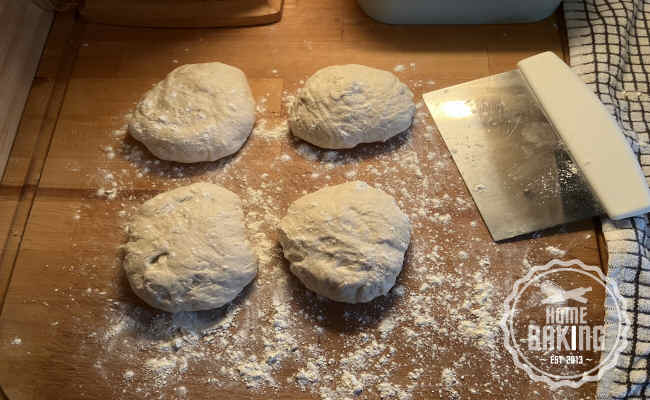
Divide the dough into four equal portions, roll each into a ball and set aside.
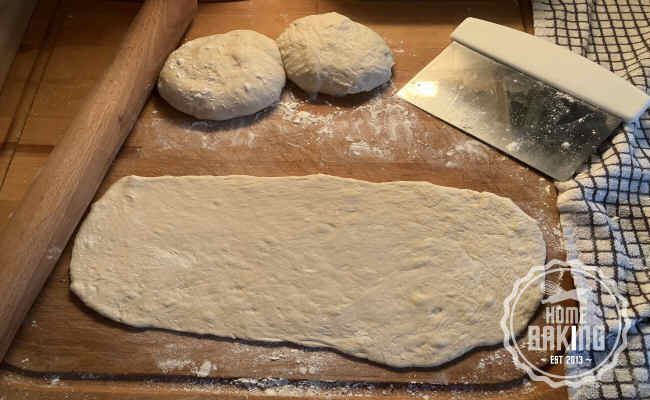
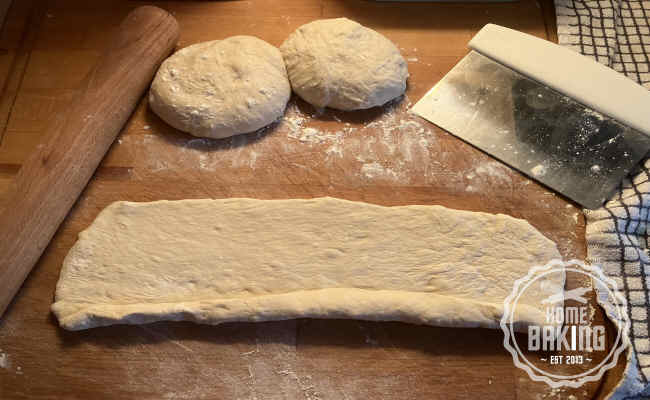
Take one ball of dough, stretch it, then roll it into a rectangle approximating 15cm x 10cm. Now, tightly roll the dough up longside to form a roll (approximately 20cm long)
The dough will be springy, so it is a case of working swiftly.
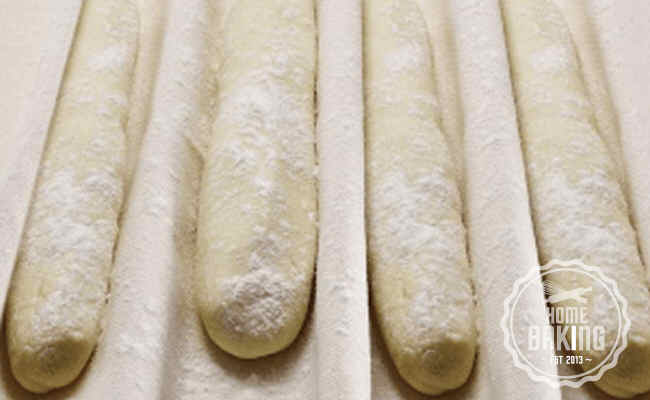
Place the rolled dough/baguette onto a clean, floured teatowel of purpose-made linen couche floured sheet, folding the towel to the edges so the following baguettes do not touch each other.
A baguette proving cloth, known as a baker's couche, is made from unbleached linen.
Repeat this process for the remaining three. At this stage, you can add poppy or sesame seeds to the top of the bread, or leave it as is.
Use a baker's lame, razor blade, or a very sharp, thin-bladed knife to cut a few cuts into the top. Cut across the baguette lengthwise, making long cuts above a quarter of the baguette's depth. And allow the baguette to prove once more for about 20 minutes.
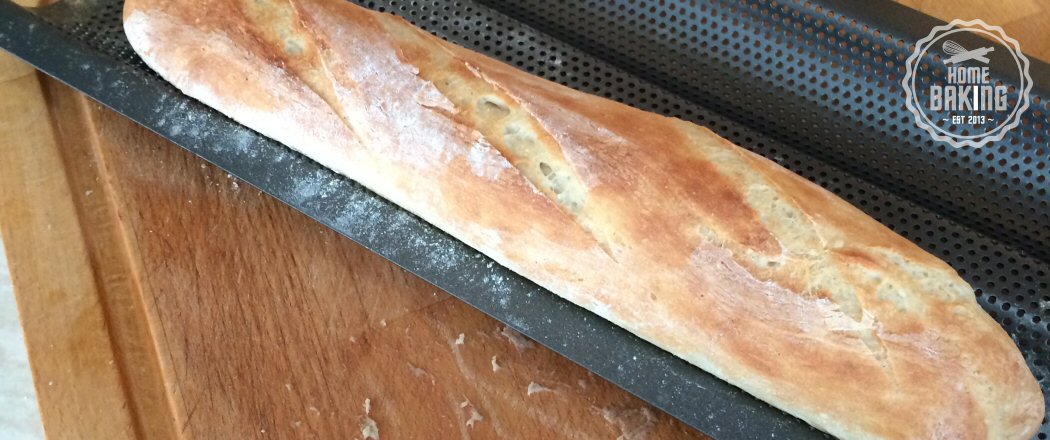
Place the poured baguettes onto a baking tray, but for better results, invest in a non-stick baguette tray. This will help with an even bake and keep the baguettes straight during baking.
Heat your oven to 220 °C and place an oven tray at the bottom to heat up.
Place the baguettes in the middle of the preheated oven and pour half a cup of cold water onto the hot tray below to create steam. Bake for 14-15 minutes. The steam will crisp the baguettes to give them their familiar crusty texture.
Remove and allow to cool before eating. You can also freeze baguettes; they take about 20-30 mins to defrost.
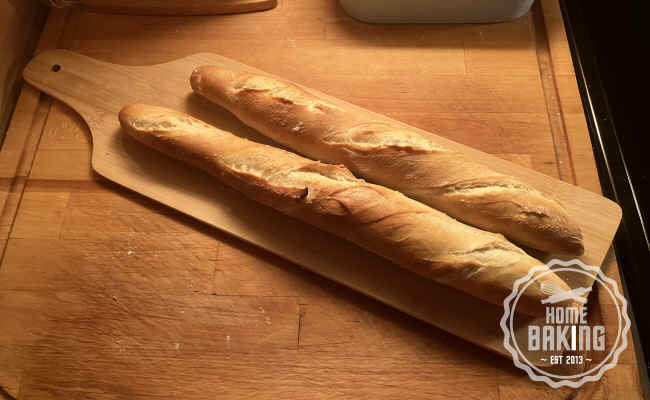
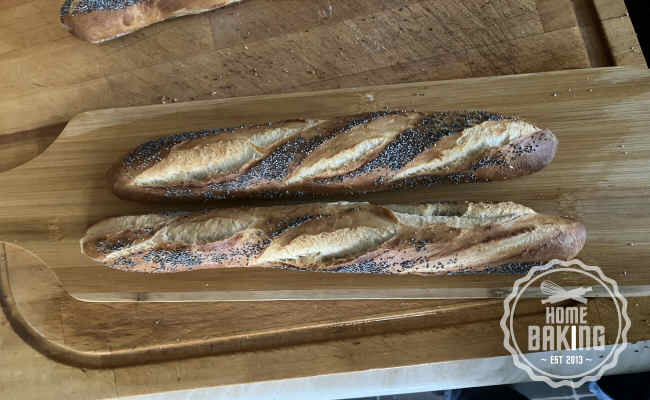
Bread making may seem like a lot of work, but most of the time is just spent allowing the dough to prove. But hopefully you will find the finished results well worth the effort.

Comments